

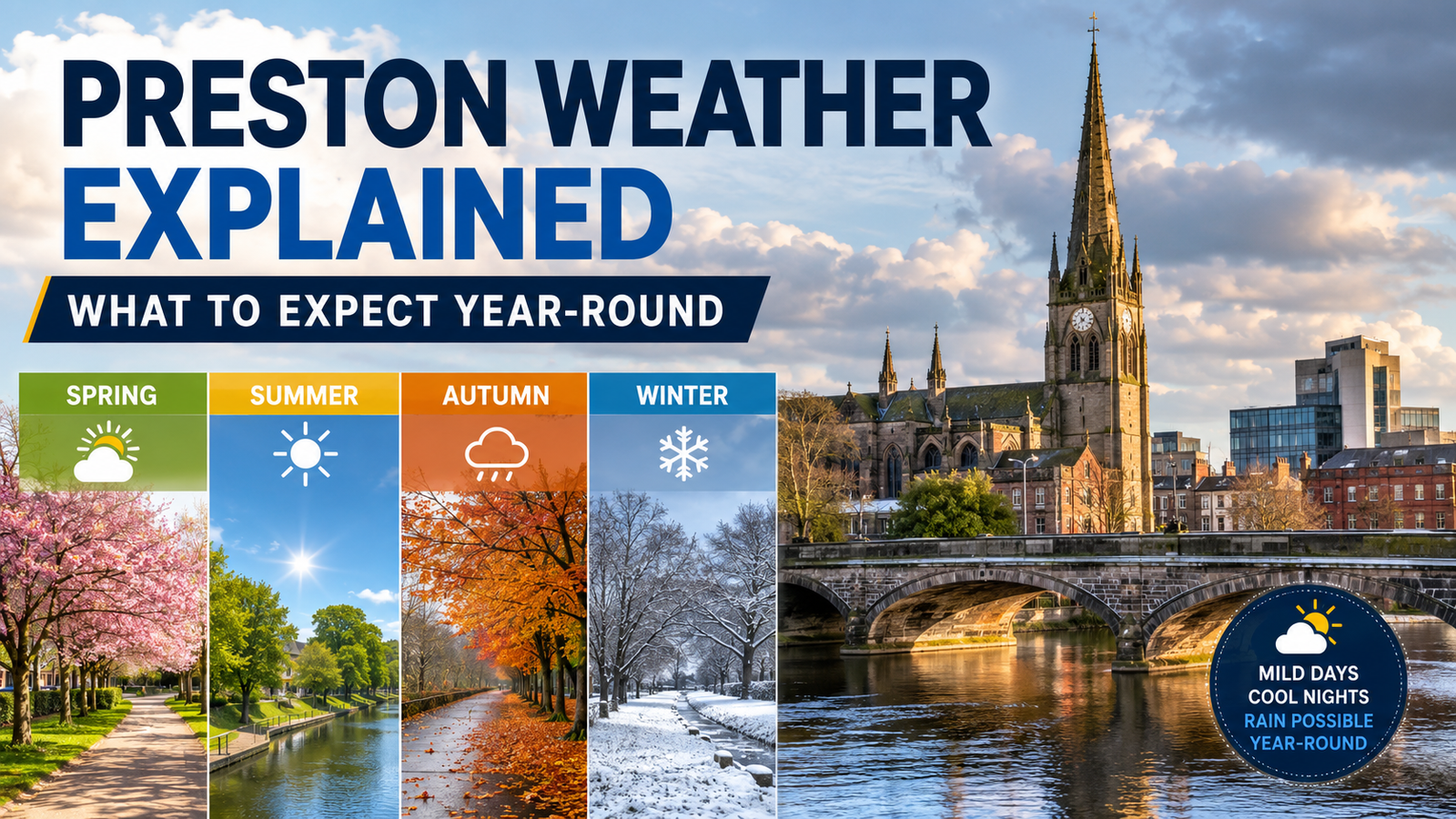
Preston Weather Explained: What to Expect Year-Round
Preston weather is known for its mild temperatures, frequent rainfall, and changing skies throughout the year. Located in Lancashire in North West England, Preston experiences a temperate maritime climate influenced by the Atlantic Ocean. This means residents and visitors rarely face extreme heat or severe cold, but they should be prepared for occasional rain in every season.
Understanding Preston weather can help you plan daily activities, holidays, outdoor events, or even a move to the city. Whether you’re visiting for a weekend, studying at the local university, or relocating permanently, knowing what to expect from the climate makes planning much easier.
This guide explains Preston weather across the seasons, average temperatures, rainfall patterns, and practical advice for dressing and travelling throughout the year.
Key Takeaways
- Preston has a temperate maritime climate with mild summers and cool winters.
- Rainfall is possible in every month, making waterproof clothing useful year-round.
- Summer temperatures are generally comfortable rather than excessively hot.
- Winter is usually cool, with frost more common than heavy snowfall.
- Spring and autumn bring changing conditions that can vary from sunshine to showers within hours.
Main Article
Understanding Preston Weather
Preston sits in Lancashire, where the climate is shaped by prevailing Atlantic weather systems. Moist air moving in from the Irish Sea often brings cloud cover and regular rainfall.
Unlike regions with dramatic seasonal differences, Preston experiences gradual changes throughout the year. Temperatures remain moderate, making the area comfortable for outdoor activities in every season when dressed appropriately.
Climate at a Glance
| Climate Feature | Typical Conditions |
|---|---|
| Climate Type | Temperate maritime |
| Summers | Mild to warm |
| Winters | Cool and damp |
| Rainfall | Evenly distributed throughout the year |
| Snow | Occasional but usually limited |
| Humidity | Moderate to high |
| Wind | Frequent Atlantic breezes |
Preston Weather in Spring
Spring usually begins with cool mornings before gradually becoming warmer.
March
March often feels chilly, with average daytime temperatures between 8°C and 11°C. Rain showers remain common, although longer sunny periods begin to appear.
April
April is known for rapidly changing weather conditions. Sunshine, cloud, and rain may all occur on the same day.
Average temperatures range from:
- Daytime: 11–14°C
- Night: 4–6°C
May
May often provides some of Preston’s most pleasant weather before the summer holiday season arrives.
Typical conditions include:
- Longer daylight hours
- Greener parks and gardens
- Comfortable walking weather
- Increasing sunshine
Preston Weather in Summer
Summer is generally mild compared with many parts of Europe.
Heatwaves occasionally occur, but prolonged extreme temperatures are uncommon.
Average Summer Temperatures
| Month | Average High | Average Low |
|---|---|---|
| June | 18°C | 10°C |
| July | 20°C | 12°C |
| August | 20°C | 12°C |
Summer rainfall still occurs regularly, but many days remain pleasant for outdoor activities.
Popular summer activities include:
- Walking in Avenham Park
- Exploring Lancashire countryside
- Visiting local markets
- Outdoor dining
- Sporting events
Light clothing is suitable during warm afternoons, although carrying a waterproof jacket is always sensible.
Preston Weather in Autumn
Autumn gradually becomes cooler while colourful foliage transforms parks and surrounding countryside.
September
September often feels surprisingly warm, particularly during early weeks.
Average temperatures remain around:
- 18°C during the day
- 10°C at night
October
Rainfall becomes more frequent.
Morning fog occasionally develops before clearing later in the day.
November
November brings shorter daylight hours and cooler conditions.
Typical temperatures:
- High: 9–11°C
- Low: 3–5°C
Warm layers become increasingly important.
Preston Weather in Winter
Winter is generally cool rather than severely cold.
Heavy snow is relatively uncommon, although light snowfall and frost can occur.
December
Festive markets and winter events often take place despite cool weather.
Average temperatures:
- High: 7°C
- Low: 2°C
January
January is typically Preston’s coldest month.
Conditions often include:
- Frosty mornings
- Cloudy days
- Occasional icy roads
- Rain mixed with sleet
February
Although winter continues, daylight gradually increases, offering signs of approaching spring.
Rainfall Throughout the Year
One characteristic that defines Preston weather is consistent rainfall.
Rain does not necessarily mean continuous heavy downpours. Instead, showers are often intermittent and followed by brighter spells.
Visitors should expect:
- Light drizzle
- Passing showers
- Occasional heavier rain
- Cloudy mornings followed by sunshine
Carrying a compact umbrella or waterproof jacket is practical regardless of the season.
Sunshine Hours
Although Preston is not among the UK’s sunniest locations, it still enjoys many pleasant days.
Average sunshine generally increases from late spring through summer before gradually decreasing during autumn and winter.
Longest daylight occurs in June, while December has the shortest days.
Wind Conditions
Atlantic weather systems occasionally produce breezy conditions.
Wind is usually strongest during:
- Late autumn
- Winter
- Early spring
Most windy days remain manageable, though exposed areas may feel noticeably cooler.
Best Time to Visit Preston
The ideal time depends on your interests.
| Season | Best For |
|---|---|
| Spring | Gardens, sightseeing, walking |
| Summer | Outdoor events and parks |
| Autumn | Scenic countryside and photography |
| Winter | Christmas markets and cosy attractions |
Many visitors prefer May through September for comfortable temperatures and longer daylight hours.
What to Wear in Preston
Packing flexible clothing works best because conditions can change quickly.
Spring
- Waterproof jacket
- Light jumper
- Comfortable walking shoes
Summer
- T-shirts
- Lightweight trousers or shorts
- Sunglasses
- Light rain jacket
Autumn
- Sweater
- Waterproof footwear
- Medium-weight coat
Winter
- Warm coat
- Hat
- Gloves
- Waterproof boots
Layering clothing allows easy adjustment throughout the day.
How Preston Weather Affects Daily Life
The local climate influences everyday routines without creating major disruptions.
Residents commonly:
- Carry umbrellas year-round
- Dress in layers
- Check daily forecasts before travelling
- Continue outdoor activities despite light rain
Because temperatures remain moderate, daily life generally continues normally in all seasons.
Travel Tips Based on Preston Weather
To make the most of your visit:
- Always carry waterproof clothing.
- Wear comfortable walking shoes.
- Check local forecasts before day trips.
- Allow extra travel time during heavy rain.
- Pack layers instead of relying on one heavy coat outside winter.
These simple preparations make changing weather much easier to manage.
Common Myths About Preston Weather
“It rains all day.”
Rain is frequent, but it rarely lasts continuously throughout the day.
“Summers are cold.”
Summer temperatures are generally comfortable, with pleasant afternoons suitable for outdoor activities.
“Winter always brings heavy snow.”
Snow does occur occasionally, but extended periods of heavy snowfall are relatively uncommon.
Frequently Asked Questions
Is Preston weather colder than London?
Generally, Preston is slightly cooler than London due to its more northerly location and proximity to Atlantic weather systems.
Does Preston get a lot of rain?
Rainfall is common throughout the year, but it often falls as intermittent showers rather than continuous heavy rain.
What is the hottest month in Preston?
July is usually the warmest month, with average daytime temperatures around 20°C.
Does it snow in Preston?
Snow is possible during winter but is usually light and does not remain on the ground for extended periods.
What is the best month to visit Preston?
Many visitors choose May, June, or September because temperatures are comfortable and daylight hours are relatively long.
Should I pack an umbrella for Preston?
Yes. Rain can occur in any season, making a compact umbrella or waterproof jacket a practical choice.
Conclusion
Preston weather reflects the classic characteristics of North West England’s maritime climate. Mild summers, cool winters, and regular rainfall create conditions that are generally comfortable throughout the year. While the weather can change quickly, it rarely reaches extremes, making Preston an enjoyable destination in every season.
Whether you are planning a holiday, moving to the city, or simply curious about the local climate, understanding seasonal temperatures, rainfall patterns, and packing recommendations helps you make the most of your time in Preston. With the right clothing and a little preparation, you can comfortably enjoy everything the city and surrounding Lancashire countryside have to offer, whatever the forecast.









Leave a Reply