

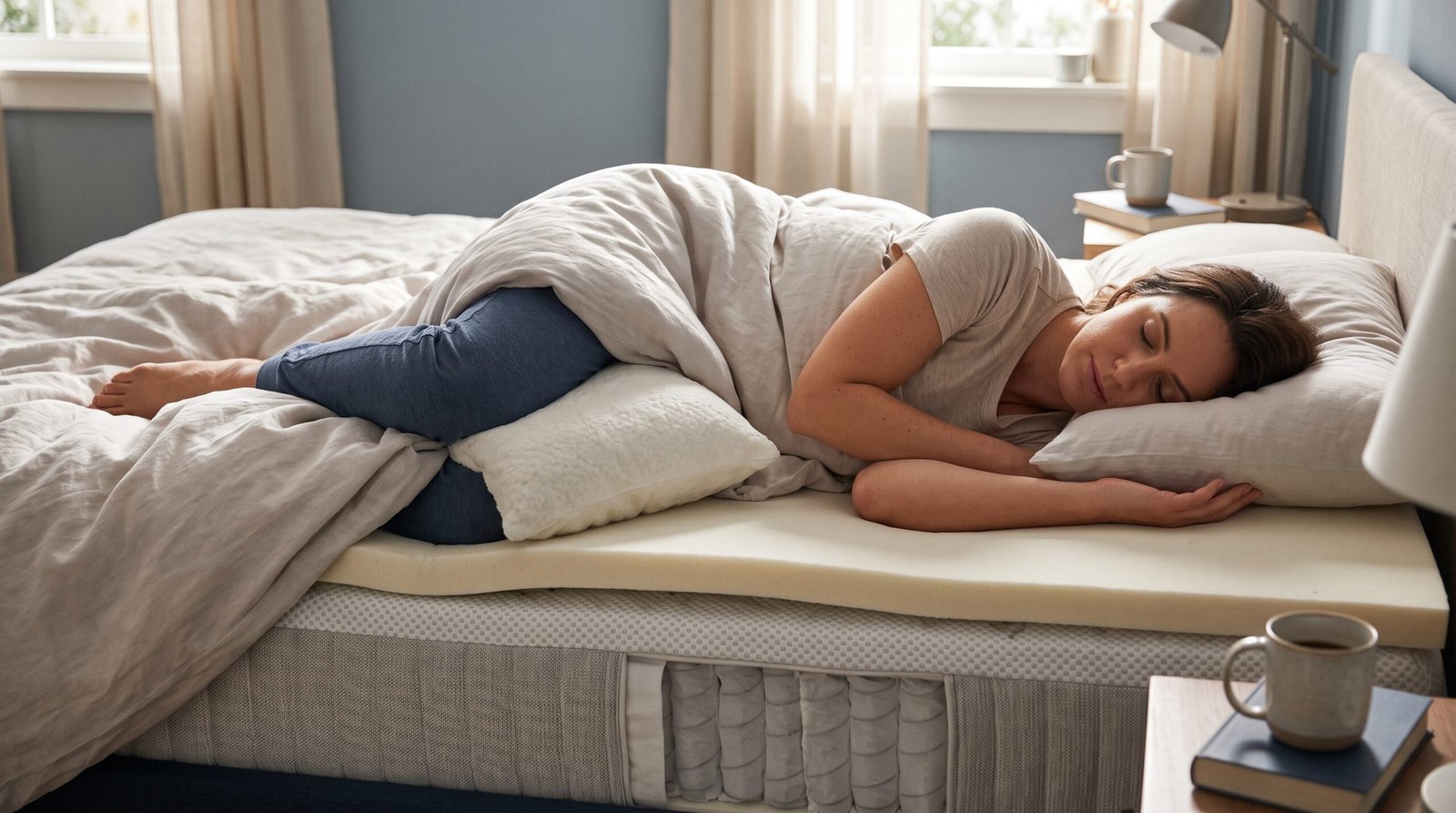
Waking up with back pain can make every day feel more difficult, especially if you’re a side sleeper. While sleeping on your side is often recommended for spinal health, the wrong mattress can create pressure on your shoulders and hips while allowing your spine to fall out of alignment. That’s why choosing the best mattress for side sleepers with back pain is one of the most important investments you can make for better sleep and overall well-being.
The ideal mattress should relieve pressure, support the natural curve of your spine, and keep your body comfortably aligned throughout the night. Whether you’re dealing with chronic lower back pain, occasional stiffness, or discomfort caused by an aging mattress, understanding what features matter most will help you make a smarter buying decision.
Why Side Sleepers Often Experience Back Pain
Side sleeping is one of the healthiest sleeping positions because it can reduce snoring, improve circulation, and decrease acid reflux. However, it also places more pressure on certain parts of the body.
Your shoulders and hips carry most of your body weight while lying on your side. If a mattress is too firm, these areas may not sink in enough, creating pressure points and pushing the spine out of alignment. If it’s too soft, your hips can sink too deeply, causing your lower back to twist unnaturally.
The right balance between cushioning and support is essential to maintain a neutral spinal position throughout the night.
What Makes the Best Mattress for Side Sleepers With Back Pain?
Not every mattress is designed to provide both pressure relief and proper spinal support. Here are the features that matter most.
Pressure Relief
Pressure relief is the first priority for side sleepers. Materials like memory foam and high-quality latex contour around the body’s curves, reducing stress on the shoulders and hips.
Good pressure relief can help prevent numbness, tingling, and soreness that often occur after sleeping on an overly firm surface.
Proper Spinal Alignment
A supportive mattress keeps your head, shoulders, hips, and legs aligned naturally. Proper alignment reduces strain on muscles and ligaments while allowing your spine to rest in a neutral position.
Mattresses with zoned support often provide extra reinforcement under the hips while remaining softer around the shoulders.
Medium to Medium-Firm Feel
For most side sleepers with back pain, a medium or medium-firm mattress provides the best balance between comfort and support.
Very soft mattresses may allow excessive sinking, while extra-firm mattresses often increase pressure on joints.
Motion Isolation
If you share your bed, motion isolation becomes important. Memory foam typically absorbs movement better than traditional spring mattresses, allowing one partner to move without disturbing the other.
Edge Support
Strong edge support helps maintain stability when sitting or sleeping near the edge of the bed. Hybrid mattresses usually perform better in this area than all-foam models.
Temperature Regulation
Many sleepers worry that foam mattresses trap heat. Modern cooling technologies such as gel-infused foam, breathable covers, open-cell foam, and pocketed coils help improve airflow and regulate sleeping temperature.
Best Mattress Types for Side Sleepers With Back Pain
Different mattress materials offer different advantages. Understanding each type makes choosing easier.
Memory Foam Mattresses
Memory foam remains one of the most popular choices for side sleepers.
Benefits include:
- Excellent pressure relief
- Strong motion isolation
- Deep body contouring
- Reduced joint pressure
High-density memory foam can also provide excellent lumbar support when paired with a supportive base layer.
Potential drawback:
Some traditional memory foam mattresses retain heat, although newer cooling designs have significantly improved airflow.
Hybrid Mattresses
Hybrid mattresses combine individually wrapped coils with multiple comfort foam layers.
Advantages include:
- Better airflow
- Balanced support
- Excellent pressure relief
- Strong edge support
- Responsive feel
Many sleep experts recommend hybrids for people experiencing chronic lower back pain because they offer the contouring of foam without excessive sinking.
Latex Mattresses
Natural latex offers a responsive sleeping surface with impressive durability.
Benefits include:
- Responsive support
- Naturally cooler sleep
- Good pressure relief
- Long lifespan
- Eco-friendly options
Latex doesn’t hug the body as deeply as memory foam, making it a good option for sleepers who prefer easier movement during the night.
Innerspring Mattresses
Traditional innerspring mattresses generally provide strong support but often lack sufficient pressure relief for side sleepers.
Unless combined with a thick comfort layer or pillow top, they may create excessive pressure around the shoulders and hips.
Choosing the Right Firmness Level
Firmness is highly personal, but body weight plays a major role.
Lightweight Sleepers
People under approximately 130 pounds usually benefit from a softer mattress that allows enough contouring around pressure points.
Average Weight Sleepers
Those between roughly 130 and 230 pounds often find medium or medium-firm mattresses provide the ideal combination of cushioning and support.
Heavier Sleepers
People over approximately 230 pounds generally need firmer support to prevent excessive sinking while still maintaining pressure relief.
Hybrid mattresses with reinforced coil systems often perform especially well for heavier side sleepers.
Important Features to Look For
Beyond mattress type, several design elements can improve sleep quality.
Zoned Support
Zoned support systems use varying firmness levels across different areas of the mattress.
Typically, they provide:
- Softer support under shoulders
- Firmer support beneath hips
- Balanced spinal alignment
This design is particularly beneficial for side sleepers with lower back pain.
High-Density Support Core
A strong support core prevents long-term sagging and helps maintain spinal alignment over many years.
Lower-quality mattresses often lose support quickly, leading to worsening back discomfort.
Durable Materials
Quality materials generally maintain their shape longer.
Look for:
- High-density memory foam
- Natural latex
- Individually wrapped coils
- Reinforced edge construction
Durability becomes especially important if you experience chronic pain.
Sleeping Position Still Matters
Even with the best mattress for side sleepers with back pain, sleeping posture can affect spinal alignment.
Consider these habits:
- Keep your ears, shoulders, and hips aligned.
- Avoid curling into an extreme fetal position.
- Place a pillow between your knees.
- Use a pillow that keeps your neck aligned with your spine.
These simple adjustments can significantly reduce morning stiffness.
When Your Mattress Could Be Causing Back Pain
Sometimes the mattress itself is the problem.
Signs it’s time for a replacement include:
- Visible sagging
- Permanent body impressions
- Increased morning pain
- Poor sleep quality
- Squeaking springs
- Feeling more comfortable sleeping elsewhere
Most quality mattresses remain supportive for several years, although lifespan varies depending on materials and usage.
Memory Foam vs Hybrid for Back Pain
This is one of the most common questions among mattress shoppers.
Memory Foam
Best for people who want:
- Maximum pressure relief
- Deep contouring
- Minimal motion transfer
- Cushioned comfort
Hybrid
Best for people who want:
- Better airflow
- More responsiveness
- Stronger edge support
- Balanced support and comfort
Both can work well, provided they match your body type and comfort preferences.
Common Mistakes to Avoid
Choosing the wrong mattress often leads to ongoing discomfort.
Avoid these common mistakes:
Buying Based Only on Firmness
A firm mattress isn’t automatically better for back pain. Proper spinal alignment matters more than firmness alone.
Ignoring Your Sleeping Position
Recommendations for back sleepers may not work for side sleepers. Your mattress should match how you actually sleep.
Choosing the Cheapest Option
A mattress is used every night. Poor-quality materials may lose support quickly, resulting in discomfort and earlier replacement.
Forgetting About Pillows
Even an excellent mattress can’t compensate for an unsupportive pillow. Your pillow should keep your neck aligned with your spine while sleeping on your side.
Tips for Reducing Back Pain While Sleeping
A supportive mattress works best alongside healthy sleep habits.
Helpful practices include:
- Stretch gently before bedtime.
- Maintain a consistent sleep schedule.
- Replace worn-out pillows.
- Rotate your mattress if recommended by the manufacturer.
- Maintain a healthy body weight to reduce spinal stress.
- Stay physically active to strengthen your core and back muscles.
If your pain persists despite improving your sleep setup, consult a qualified healthcare professional to rule out underlying medical conditions.
How to Test a Mattress Before Committing
Whenever possible, choose a mattress that includes a sleep trial. It often takes several weeks for your body to fully adjust to a new sleeping surface.
During the trial period, pay attention to:
- Morning back pain
- Shoulder and hip pressure
- Ease of changing positions
- Overall sleep quality
- Temperature comfort
A mattress that feels unusual on the first night may become significantly more comfortable after your body adapts.
Is an Adjustable Base Worth Considering?
Some side sleepers with persistent back pain benefit from pairing their mattress with an adjustable base.
Elevating the upper body or slightly raising the knees can reduce pressure on the lower back for certain individuals. Adjustable bases are especially popular with compatible memory foam and hybrid mattresses.
While they aren’t necessary for everyone, they can provide additional comfort if recommended by a healthcare provider or if you find certain sleeping angles relieve pain.
Conclusion
Finding the best mattress for side sleepers with back pain isn’t about choosing the softest or firmest model—it’s about achieving the right balance of pressure relief, spinal alignment, and long-term support. A quality memory foam, hybrid, or latex mattress with medium to medium-firm comfort often provides the combination most side sleepers need to sleep comfortably and wake up with less pain.
By focusing on your body type, preferred feel, and essential features like pressure relief, zoned support, and durability, you can choose a mattress that supports healthier sleep for years to come. Investing in the right mattress today can lead to better rest, improved comfort, and a healthier back tomorrow.











Leave a Reply