

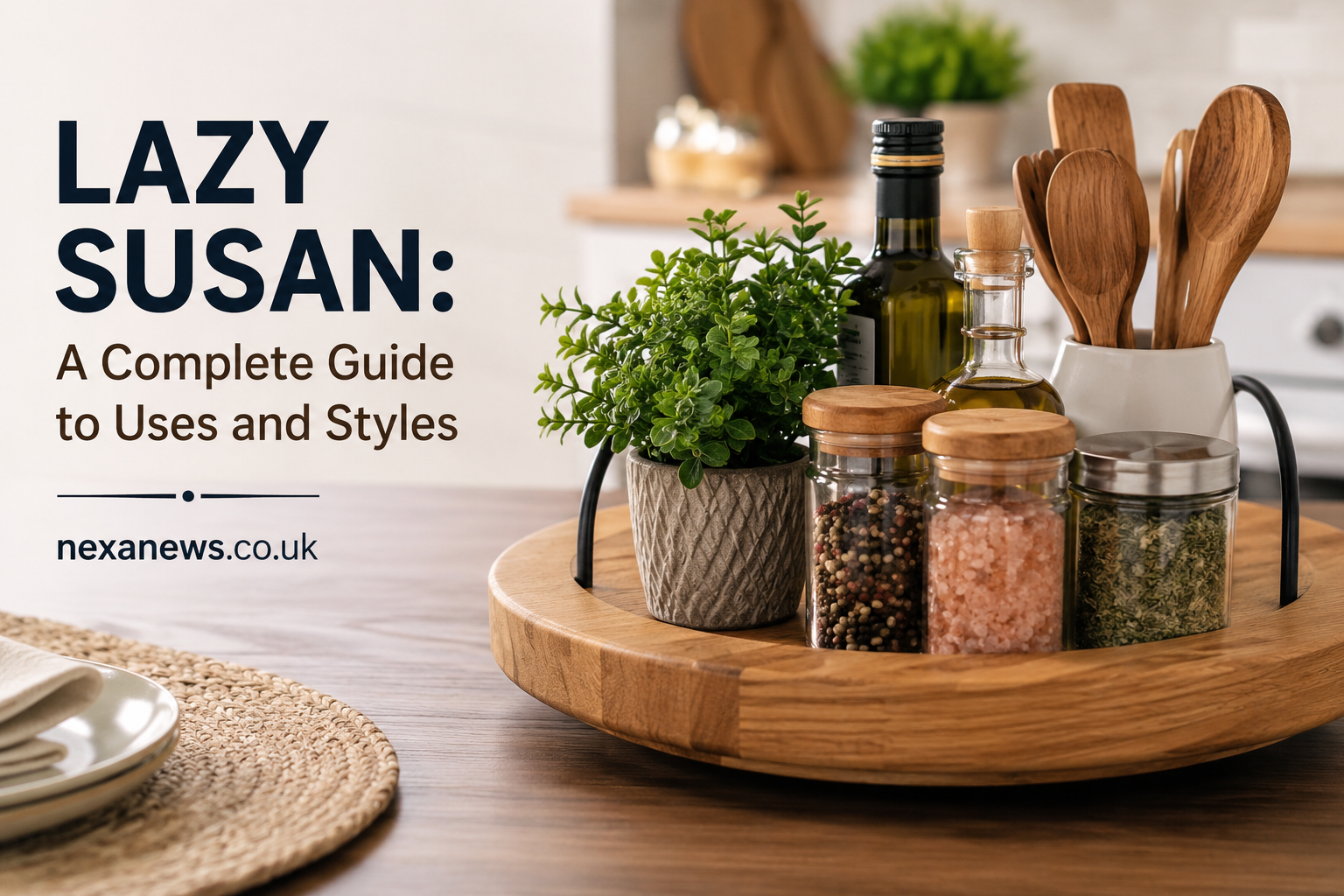
Lazy Susan: A Complete Guide to Uses and Styles
A Lazy Susan is one of the simplest yet most practical home accessories ever created. Designed to rotate smoothly, it makes it easier to reach items without stretching across a table or searching through deep cabinets. Whether used on a dining table, inside a kitchen cupboard, or as part of a pantry organisation system, a Lazy Susan helps maximise convenience while making better use of available space.
Today, Lazy Susans are available in many materials, sizes, and designs, making them suitable for modern kitchens, traditional dining rooms, bathrooms, offices, and even outdoor entertaining areas.
This guide explains everything you need to know about a Lazy Susan, including its history, common uses, popular styles, advantages, materials, buying tips, and maintenance advice to help you choose the right option for your home.
Key Takeaways
- A Lazy Susan is a rotating tray designed for easy access to stored or shared items.
- It improves organisation in kitchens, pantries, dining tables, and storage cabinets.
- Available in wood, bamboo, plastic, glass, metal, and stone finishes.
- Different sizes and designs suit various storage and serving needs.
- Choosing the right model depends on location, material, size, and weight capacity.
Main Article
What Is a Lazy Susan?
A Lazy Susan is a circular rotating platform that spins on a central bearing. It allows users to access items simply by turning the tray instead of reaching across a surface or digging into a cabinet.
Although traditionally associated with dining tables, modern Lazy Susans have become essential storage organisers throughout the home.
Common locations include:
- Kitchen cabinets
- Corner cupboards
- Pantry shelves
- Dining tables
- Refrigerators
- Bathroom counters
- Office desks
- Craft rooms
Its rotating design helps reduce clutter while improving accessibility.
The History of the Lazy Susan
The exact origin of the Lazy Susan remains uncertain.
Several theories suggest rotating serving trays existed in Europe during the 18th century, while others believe the design became popular in North America during the Victorian era.
The name “Lazy Susan” likely became common in the early 20th century. Despite many stories about its origin, there is no verified historical evidence identifying a specific person named Susan who inspired the name.
Regardless of its history, the concept has remained remarkably useful for generations.
How Does a Lazy Susan Work?
The design is surprisingly simple.
A rotating bearing mechanism is mounted beneath a circular platform. The bearing allows the tray to spin smoothly in either direction.
Most models consist of:
| Component | Purpose |
|---|---|
| Rotating platform | Holds stored items |
| Bearing mechanism | Allows smooth rotation |
| Base | Keeps the unit stable |
| Outer edge (optional) | Prevents items from falling |
Some premium models include non-slip surfaces, raised edges, removable dividers, or multi-level designs.
Common Uses of a Lazy Susan
Dining Tables
This is the classic use.
A Lazy Susan allows everyone seated at the table to access dishes, sauces, spices, and drinks without passing items around.
It works especially well for:
- Family meals
- Holiday dinners
- Buffets
- Large gatherings
- Round dining tables
Kitchen Cabinets
Deep cabinets often waste valuable storage space.
Installing a rotating shelf makes it easier to reach:
- Cooking oils
- Spices
- Baking ingredients
- Canned foods
- Small appliances
Corner Cabinets
Corner cupboards can be difficult to organise.
Specially designed cabinet Lazy Susans rotate shelving units into view, making use of otherwise awkward spaces.
Pantry Organisation
Many homeowners use Lazy Susans inside pantries to organise:
- Condiments
- Sauces
- Snacks
- Breakfast items
- Baking supplies
Instead of moving several containers, everything rotates into reach.
Bathroom Storage
Bathrooms benefit from compact rotating organisers for:
- Skincare
- Cosmetics
- Hair products
- Medicines
- Toiletries
They keep countertops tidy while improving accessibility.
Refrigerator Organisation
Rotating trays are increasingly used inside refrigerators to organise:
- Dressings
- Jars
- Bottles
- Dairy products
This reduces forgotten food hidden at the back of shelves.
Popular Types of Lazy Susan
Standard Round Lazy Susan
The traditional rotating tray suitable for tables and countertops.
Best for:
- Serving food
- Condiments
- Decorative displays
Cabinet Lazy Susan
Designed specifically for kitchen cabinets.
Usually installed permanently inside:
- Base cabinets
- Corner cabinets
- Pantry units
Two-Tier Lazy Susan
Provides two rotating storage levels.
Ideal when vertical space is available.
D-Shaped Lazy Susan
A flat edge fits neatly against cabinet doors while maintaining rotating storage.
Full Circle Lazy Susan
A complete circular shelf commonly installed inside corner cabinets.
Pull-Out Lazy Susan
Combines rotating and sliding mechanisms for easier access in modern kitchens.
Materials Used
Different materials offer unique advantages.
| Material | Advantages | Best For |
|---|---|---|
| Bamboo | Sustainable and attractive | Kitchens, dining |
| Wood | Classic appearance | Dining rooms |
| Plastic | Lightweight and affordable | Pantry, bathroom |
| Metal | Durable and modern | Heavy storage |
| Glass | Elegant presentation | Dining tables |
| Marble or Stone | Luxury appearance | Decorative serving |
Choosing the Right Lazy Susan
Several factors influence the best choice.
Size
Measure the available space carefully.
Common sizes include:
- 9 inches
- 12 inches
- 14 inches
- 16 inches
- 18 inches
- 20 inches
For cabinets, always leave enough clearance for rotation.
Weight Capacity
Consider what the tray will hold.
Light-duty models work well for spices.
Heavy-duty versions are better for:
- Cookware
- Appliances
- Large serving dishes
Material
Choose according to your needs.
For everyday kitchen use:
- Bamboo
- Plastic
- Wood
For elegant entertaining:
- Glass
- Marble
- Hardwood
Edge Design
Raised edges help prevent bottles or containers from sliding off during rotation.
Rotation Quality
A quality bearing should rotate smoothly without wobbling or sticking.
Benefits of Using a Lazy Susan
Better Organisation
Everything becomes easier to find.
Instead of searching through crowded shelves, simply rotate the tray.
Improved Accessibility
Items stored at the back become instantly reachable.
This is especially helpful for elderly users or anyone with limited mobility.
Maximises Storage Space
A Lazy Susan makes better use of deep cabinets and corner cupboards.
Reduces Clutter
Grouping similar items together creates cleaner, more organised storage.
Saves Time
Cooking becomes more efficient when ingredients are easy to access.
Decorative Uses
Beyond storage, Lazy Susans make attractive decorative pieces.
Popular ideas include:
- Seasonal centrepieces
- Candle displays
- Indoor plants
- Coffee stations
- Charcuterie boards
- Tea stations
Rotating displays also make entertaining more convenient.
Lazy Susan vs Fixed Shelves
| Feature | Lazy Susan | Fixed Shelf |
|---|---|---|
| Accessibility | Excellent | Moderate |
| Space efficiency | High | Medium |
| Corner cabinet use | Excellent | Limited |
| Organisation | Easy | Can become cluttered |
| Installation | Moderate | Simple |
For deep or awkward cabinets, a Lazy Susan usually offers greater convenience.
Installation Tips
If installing inside cabinetry:
- Measure carefully before purchasing.
- Ensure enough clearance for rotation.
- Follow the manufacturer’s instructions.
- Secure the centre bearing properly.
- Test rotation before loading items.
Some models require professional installation, particularly corner cabinet systems.
Cleaning and Maintenance
Maintenance is straightforward.
For best results:
- Wipe surfaces regularly with a damp cloth.
- Dry wooden models immediately after cleaning.
- Avoid excessive moisture on bamboo.
- Clean bearings if rotation becomes stiff.
- Avoid overloading the tray.
- Tighten loose fittings periodically.
With proper care, a quality Lazy Susan can last for many years.
Common Mistakes to Avoid
Avoid these frequent problems:
- Buying the wrong size
- Ignoring weight limits
- Overloading one side
- Choosing unsuitable materials for wet areas
- Forgetting to measure cabinet openings
- Blocking rotation with oversized items
Proper planning ensures the best performance.
Are Lazy Susans Still Popular?
Yes.
Modern kitchens continue to embrace Lazy Susans because they solve everyday storage challenges without requiring complicated technology.
Home organisers, interior designers, and kitchen planners frequently recommend them for improving functionality, especially in smaller homes where efficient storage matters.
Their timeless design means they remain useful regardless of changing interior trends.
Frequently Asked Questions
What is a Lazy Susan used for?
A Lazy Susan is used to organise and access items more easily. It commonly serves food on dining tables or stores kitchen supplies, spices, condiments, and household items.
Why is it called a Lazy Susan?
The exact origin of the name is unknown. While several theories exist, there is no confirmed historical evidence explaining who Susan was or why the name became associated with the rotating tray.
Are Lazy Susans only for kitchens?
No. They are also useful in bathrooms, offices, refrigerators, craft rooms, laundry rooms, and dining areas.
What material is best for a Lazy Susan?
It depends on the intended use. Bamboo and wood offer a natural appearance, plastic is affordable and practical, while metal and glass provide durability or decorative appeal.
How do I choose the correct size?
Measure the available space first, especially inside cabinets. Ensure there is enough clearance for the tray to rotate freely without hitting doors or shelves.
Can a Lazy Susan hold heavy items?
Many heavy-duty models can support cookware, appliances, or large serving dishes. Always check the manufacturer’s recommended weight capacity before use.
Do Lazy Susans require installation?
Countertop models require no installation. Cabinet versions may need assembly or permanent installation, depending on the design.
Conclusion
A Lazy Susan remains one of the most practical additions to any home. Its simple rotating design improves organisation, maximises storage space, and makes everyday items easier to reach. Whether you need a stylish serving tray for entertaining guests or a functional organiser for cabinets and pantries, there is a Lazy Susan to suit virtually every space and lifestyle.
By selecting the right size, material, and style, you can enhance both convenience and efficiency throughout your home. From kitchens and dining rooms to bathrooms and offices, this timeless storage solution continues to prove that smart design often comes from the simplest ideas.







Leave a Reply